Wingfoil para ex-kitesurfistas: qué cambia y qué se transfiere
Por el equipo de Escuela de Wingfoil · Octubre 2026
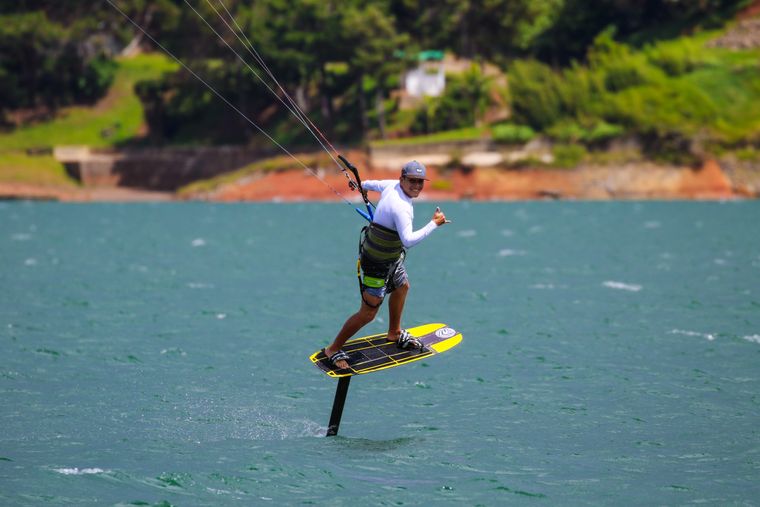
Si venís del kitesurf, tenés medio camino hecho: sabés leer el viento, entendés la ventana de viento y sabés volver a la costa contra el viento. Pero el wingfoil tiene su propia lógica, y algunos reflejos de kiter juegan en contra al principio. Acá va qué se transfiere, qué cambia y cómo acortar la curva.
En 30 segundos
- Se transfiere: lectura del viento, rumbos, ceñida, criterio de seguridad y, si hiciste kitefoil, todo el manejo del foil.
- Cambia: el ala va en las manos y no tira tanto, la tabla necesita mucho más volumen y el pumping es parte de la técnica.
- Tiempo: muchos kiters foilean en pocas sesiones. Los que ya hacen kitefoil, a veces en la primera.
Lo que ya sabés (y te sirve)
- Leer el viento y el spot: pronóstico, ráfagas, onshore u offshore, dónde está la zona segura. Es la parte que más tarda en aprender un principiante de cero.
- La ventana de viento: con el ala funciona igual. Al centro tira, en los bordes se neutraliza.
- Rumbos y ceñida: sabés que para volver hay que ganar barlovento, y cómo se siente un rumbo cerrado.
- Autorrescate y criterio: cuándo no salir, cómo volver si algo falla.
- Si hiciste kitefoil: la postura sobre el foil, el control de altura y las trasluchadas foileadas se transfieren casi enteras.
Lo que cambia
| Kitesurf | Wingfoil | |
|---|---|---|
| Fuente de potencia | Kite con líneas, lejos y con mucha tracción | Ala en las manos, cerca y con menos tracción |
| Conexión | Arnés desde el primer día | Brazos al principio; arnés opcional más adelante |
| Tabla | Twin-tip chica, casi sin flotación | Tabla con volumen para arrancar parado |
| Arranque | Waterstart con el kite | De rodillas a parado, con pumping si hace falta |
| Si soltás todo | El kite puede seguir tirando | El ala queda flotando atada a tu muñeca |
Los errores típicos del kiter
- Buscar potencia bajando el ala, como si fuera un kite. El ala rinde más alta y con el borde de ataque apuntando hacia adelante.
- Elegir una tabla chica porque "en kite uso una de 136". En wing necesitás volumen para arrancar: al principio, tu peso más 30 a 40 litros.
- Un ala chica "porque con 18 nudos en kite uso un 9". El ala tira mucho menos que un kite del mismo metraje.
- Querer saltar o hacer maniobras antes de dominar el arranque y el pumping.
- Los brazos tensos: sin arnés, toda la tensión va a los hombros. Brazos semiflexionados y fuerza desde las piernas.
Cómo acortar la curva
- Hacé una o dos clases igual. No para aprender a leer el viento, sino para corregir los reflejos de kiter desde el principio.
- Dedicá media hora al ala en tierra (te lo explicamos en ejercicios en tierra): el ala en las manos es lo único realmente nuevo.
- Arrancá con un ala un talle más grande de lo que creés (ver la tabla por peso y viento).
- Si tenés foil de kite, consultá si es compatible: algunos sirven, pero para aprender wing conviene un ala delantera más grande.
Lo que ganás
Muchos kiters terminan teniendo las dos cosas: kite para los días fuertes y wing para los días flojos o rafagosos, que en el Río de la Plata son muchos. Además, el wing se arma más rápido, no necesita ayudante para despegar ni aterrizar el kite, y se puede usar en spots chicos o concurridos.
¿Querés una clase de conversión? Consultá a los instructores de la plataforma: la mayoría enseña kite y wing. Y si dudás entre los dos deportes, mirá wingfoil vs kitesurf vs windsurf.
If you come from kitesurfing, you're halfway there: you can read the wind, you understand the wind window and you know how to get back to shore upwind. But wingfoil has its own logic, and some kiter reflexes work against you at first. Here's what transfers, what changes and how to shorten the learning curve.
In 30 seconds
- Transfers: wind reading, points of sail, upwind riding, safety judgement and, if you've kitefoiled, all your foil handling.
- Changes: the wing is in your hands and pulls less, the board needs much more volume and pumping is part of the technique.
- Time: many kiters foil within a few sessions. Those who already kitefoil sometimes on the first.
What you already know (and can use)
- Reading the wind and the spot: forecast, gusts, onshore or offshore, where the safe zone is. It's what takes a complete beginner longest to learn.
- The wind window: it works the same with a wing. It pulls in the centre and goes neutral at the edges.
- Points of sail and upwind: you know you need to gain ground upwind to get back, and how a close reach feels.
- Self-rescue and judgement: when not to go out, how to get back if something fails.
- If you've kitefoiled: foil stance, ride-height control and foiling gybes transfer almost entirely.
What changes
| Kitesurfing | Wingfoil | |
|---|---|---|
| Power source | Kite on lines, far away and pulling hard | Wing in your hands, close and pulling less |
| Connection | Harness from day one | Arms at first; optional harness later |
| Board | Small twin-tip, almost no float | Board with volume to start standing |
| Start | Waterstart with the kite | Kneeling to standing, pumping if needed |
| If you let go of everything | The kite can keep pulling | The wing floats, tied to your wrist |
Typical kiter mistakes
- Looking for power by dropping the wing low, as if it were a kite. A wing works better held high with the leading edge pointing forward.
- Choosing a small board because "I ride a 136 on the kite". Wing needs volume to get going: at first, your weight plus 30 to 40 litres.
- A small wing "because in 18 knots I'd ride a 9 m kite". A wing pulls far less than a kite of the same size.
- Trying jumps or tricks before mastering the start and pumping.
- Tense arms: without a harness, all the tension goes to your shoulders. Slightly bent arms and power from the legs.
How to shorten the curve
- Take one or two lessons anyway. Not to learn to read the wind, but to correct kiter reflexes from the start.
- Spend half an hour with the wing on land (see land drills): the wing in your hands is the only truly new thing.
- Start with a wing one size bigger than you think (see the chart by weight and wind).
- If you own a kite foil, check if it's compatible: some work, but for learning wing a bigger front wing is better.
What you gain
Many kiters end up with both: kite for strong days and wing for light or gusty days, of which the Río de la Plata has plenty. Wing also rigs faster, needs no helper to launch or land, and works at small or crowded spots.
Want a conversion lesson? Ask the platform's instructors: most teach both kite and wing. And if you're torn between sports, see wingfoil vs kitesurf vs windsurf.


