Wingfoil: cuántas clases necesitás para salir solo
Por el equipo de Escuela de Wingfoil · Octubre 2026
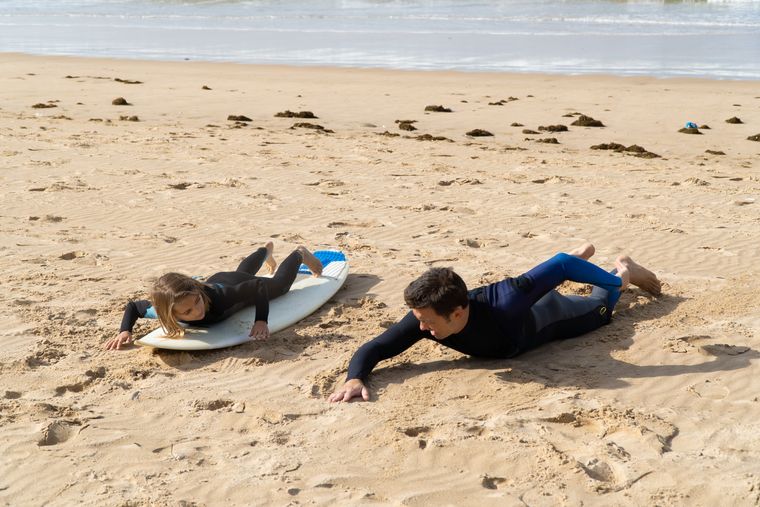
Respuesta corta: la mayoría de la gente necesita entre 5 y 10 clases para salir sola con seguridad en agua plana, y algunas más para foilear de forma estable. Si venís del kite, el windsurf, la vela o el surf, puede alcanzarte con la mitad. Depende menos de tu edad o tu estado físico que de cada cuánto practicás.
Qué significa "salir solo"
No es solo pararte en la tabla. Es poder: armar y chequear el equipo, leer si el viento y el spot son aptos para tu nivel, navegar en las dos direcciones, volver al punto de partida y resolver una caída o un problema sin ayuda. Recién ahí es seguro navegar sin instructor.
La progresión típica, clase por clase
| Etapa | Clases aprox. | Qué aprendés |
|---|---|---|
| 1. Tierra y ala | 1 | Seguridad, ventana de viento, manejo del ala caminando. |
| 2. Tabla sin foil o con foil corto | 1-2 | Subirse, arrodillarse, pararse con el ala. |
| 3. Taxi en las dos direcciones | 2-3 | Navegar con la tabla apoyada, girar, volver al punto de partida. |
| 4. Primeros despegues | 2-4 | Velocidad, carga del pie de atrás, primeros vuelos cortos. |
| 5. Autonomía | 1-2 | Salir y volver solo, autorrescate, elección del equipo según el día. |
En total, entre 7 y 12 clases para la mayoría. No todas tienen que ser con instructor: después de las primeras, muchas escuelas alquilan equipo con supervisión, que es más barato y te da horas de agua.
Qué acelera (y qué frena) el aprendizaje
- Frecuencia: dos o tres clases por semana rinden mucho más que una por mes. Con semanas de por medio, cada clase arranca repasando la anterior.
- Experiencia previa: kite, windsurf y vela te dan la lectura del viento; surf y skate, el equilibrio.
- Condiciones: agua plana y viento parejo, como el Río de la Plata en un buen día de térmico, son ideales. Olas, ráfagas o viento offshore alargan todo.
- Equipo adecuado: tabla con volumen, ala del tamaño correcto y un foil de ala delantera grande hacen una diferencia enorme.
- Trabajo en tierra: practicar el ala en la playa (ejercicios en tierra) reduce las horas en el agua.
Señales de que ya podés salir solo
- Volvés al punto de partida el 100 % de las veces, aunque sea navegando con la tabla apoyada.
- Sabés en qué días no salir (viento offshore, ráfagas fuertes, bajante del río).
- Podés resolver una caída lejos de la costa: recuperar el ala, subirte y volver.
- Tu instructor te lo dice. Si no te lo dijo, preguntale.
¿Y aprender sin clases?
Se puede, pero es más lento y más riesgoso. Analizamos los pros y los contras en aprender wingfoil solo.
Encontrá un instructor certificado cerca tuyo y preguntale cómo arma su programa de clases.
Short answer: most people need 5 to 10 lessons to ride safely on their own in flat water, and a few more to foil steadily. If you come from kiting, windsurfing, sailing or surfing, half that may be enough. It depends less on your age or fitness than on how often you practise.
What "riding on your own" means
It's not just standing on the board. It's being able to: rig and check your gear, judge whether the wind and the spot suit your level, ride in both directions, get back to your starting point and deal with a fall or a problem without help. Only then is it safe to ride without an instructor.
The typical progression, lesson by lesson
| Stage | Approx. lessons | What you learn |
|---|---|---|
| 1. Land and wing | 1 | Safety, the wind window, handling the wing while walking. |
| 2. Board without a foil or with a short foil | 1-2 | Getting on, kneeling, standing with the wing. |
| 3. Taxiing in both directions | 2-3 | Riding with the board on the water, turning, returning to your start point. |
| 4. First take-offs | 2-4 | Speed, weighting the back foot, first short flights. |
| 5. Independence | 1-2 | Going out and back alone, self-rescue, choosing gear for the day. |
In total, 7 to 12 lessons for most people. Not all of them have to be with an instructor: after the first few, many schools rent gear with supervision, which is cheaper and gives you water time.
What speeds up (and slows down) learning
- Frequency: two or three lessons a week achieve far more than one a month. With weeks in between, every lesson starts by reviewing the last.
- Previous experience: kiting, windsurfing and sailing give you wind sense; surfing and skating, balance.
- Conditions: flat water and steady wind, like the Río de la Plata on a good thermal day, are ideal. Waves, gusts or offshore wind make everything longer.
- The right gear: a board with volume, a correctly sized wing and a foil with a big front wing make a huge difference.
- Land work: practising with the wing on the beach (land drills) cuts your hours on the water.
Signs you're ready to ride on your own
- You get back to your starting point 100% of the time, even if only by taxiing.
- You know which days not to go out (offshore wind, strong gusts, low river).
- You can handle a fall far from shore: recover the wing, get back on and return.
- Your instructor tells you so. If they haven't, ask.
What about learning without lessons?
It's possible, but slower and riskier. We weigh the pros and cons in learning wingfoil on your own.
Find a certified instructor near you and ask how they structure their lessons.


